 Trusted partner in LED and AV Solutions




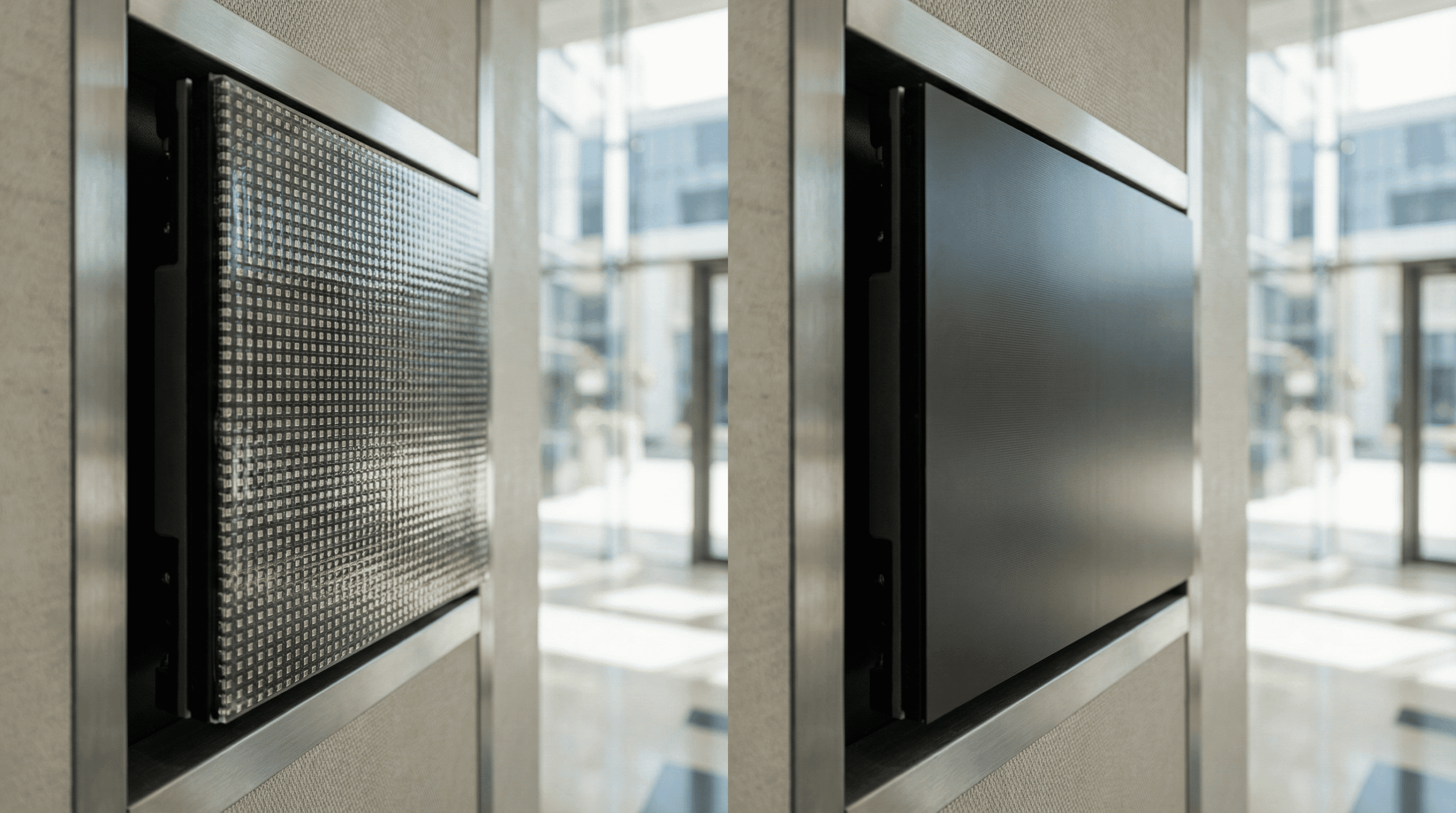

When evaluating indoor LED screens for commercial projects, two technologies frequently come up in discussions: GOB and COB. While both are designed to improve durability and visual performance compared to standard SMD displays, they serve slightly different purposes.
For businesses planning installations in the UAE or Saudi Arabia whether in retail, corporate boardrooms, or control rooms understanding the difference between GOB and COB LED displays helps ensure the right long term investment.
This guide explains how both technologies work, where they perform best, and how to choose the right option for your environment.
What Is COB LED Technology?
COB stands for “Chip on Board.” In this design, multiple LED chips are directly mounted onto a single substrate, forming a compact light emitting surface.
Unlike traditional surface-mounted LEDs, COB creates a smoother and more uniform display surface. The result is improved visual consistency, deeper contrast, and reduced glare particularly noticeable in fine pitch applications.
COB LED displays are commonly used in:
- Executive boardrooms
- Broadcast studios
- Control rooms
- High-end retail spaces
Because of their refined pixel structure, COB screens are often preferred for close viewing distances.
What Is GOB LED Technology?
GOB stands for “Glue on Board.” It is essentially an enhancement of SMD LED technology.
After the LED modules are manufactured, a transparent protective epoxy layer is applied over the surface. This protective coating shields the LEDs from physical impact, dust, and moisture.
GOB technology is especially useful in:
- Retail environments with heavy foot traffic
- Public display areas
- Interactive installations
- Educational environments
The added protective layer significantly improves durability while maintaining good visual performance.
Key Differences Between GOB and COB LED Displays
The main difference lies in structure and intended use.
COB integrates the LED chips directly into the board, creating a highly compact and seamless visual surface. This typically results in superior contrast, lower heat generation, and refined image quality.
GOB, on the other hand, enhances durability by adding a protective layer over standard LED modules. It is designed more for physical protection than for improving pixel density.
If you’re still deciding between P1.2, P1.8, or P2.5, this guide on pixel pitch in indoor LED screens breaks down viewing distance and clarity tradeoffs.
Cost Considerations
COB LED displays generally cost more due to advanced manufacturing processes and finer pixel pitch capabilities.
GOB solutions are typically more cost-efficient while still offering strong protection and acceptable visual performance for many commercial uses.
Choosing between them should not be based purely on price, but on performance requirements, risk exposure, and long-term maintenance expectations.
End Thoughts
Both GOB and COB LED technologies serve valuable purposes in modern indoor LED display installations. The right choice depends less on which is “better” and more on which aligns with your project’s functional requirements.
For corporate precision environments, COB often leads. For high-traffic commercial spaces, GOB may provide greater peace of mind.
By evaluating viewing distance, durability needs, and budget considerations together, businesses can confidently select the technology that supports long-term performance.
If you’re comparing solutions for indoor LED screens in UAE or Saudi Arabia, start by defining your environment and audience — then match the technology accordingly.

