Trusted partner in LED and AV Solutions




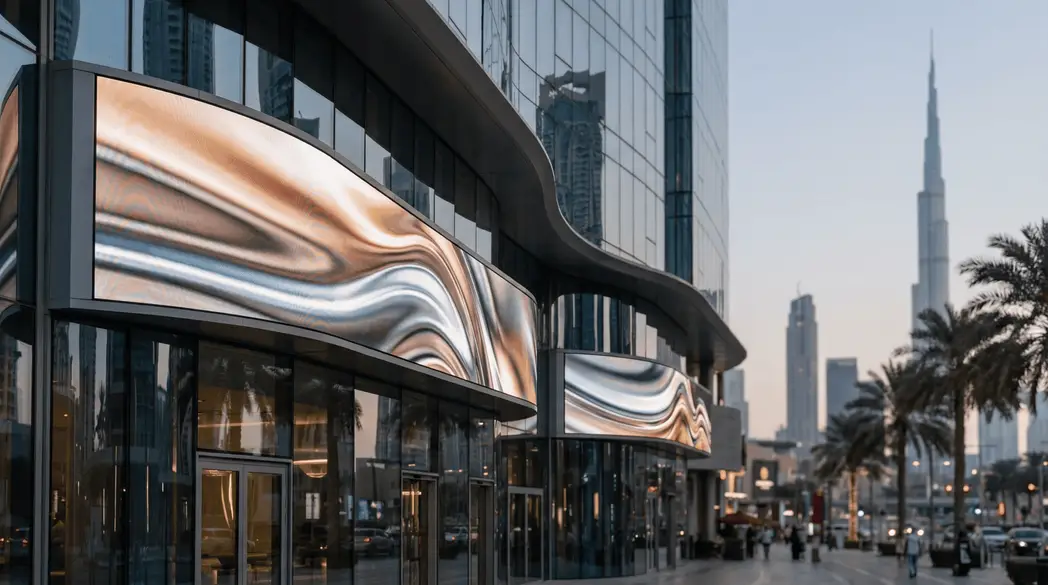

Flexible LED Displays in the UAE: Applications, Benefits, and Buying Guide
Ever walked through a UAE mall and seen a video screen that flows down a pillar like a digital waterfall? That wasn’t magic it was a flexible LED display, a technology turning our flat, rectangular world of screens on its head.
Unlike the rigid TVs we have at home, these creative video display installations are designed to bend. They can wrap around columns, flow across ceilings, or even form complete spheres, allowing designers to transform almost any surface into a stunning visual canvas.
From the dynamic advertisements in the Dubai Mall to awe-inspiring airport terminals, these curved digital signage solutions are already a part of our landscape. They prove that the most exciting visual experiences are no longer confined to a simple, flat box.
How Can a Screen Bend Without Breaking? The Secret of ‘Digital Fabric’
So, how can a screen full of delicate electronics bend into a curve or a wave? The secret isn’t that the lights themselves are flexible—they’re tiny, rigid dots. The magic lies in what holds them together. Think of a beaded curtain: the individual beads are hard, but because they’re strung onto flexible threads, the entire curtain can bend and sway effortlessly.
A flexible LED display works on the same principle. Thousands of rigid LED lights are mounted onto a durable, pliable backing, often made of silicone or rubber. This self-contained, bendable tile is known as a soft LED module. Unlike a stiff and flat rigid LED module, this design allows each section of the screen to conform to a non-flat surface.
The primary advantage of this pliable LED technology is immense creative freedom. By linking these soft modules together like a digital fabric, designers can wrap screens around pillars, create flowing waves, or even build massive spheres. This ability turns almost any structure into a dynamic canvas, changing both architecture and entertainment.
From Pillars to Spheres: Where to Spot Amazing Flexible Screens in the UAE
That “digital fabric” is already transforming public spaces, especially in the UAE. One of the most stunning uses for cylindrical LED displays is wrapping structural pillars in malls and airports. Instead of seeing plain concrete, you might be greeted by a vibrant, moving waterfall or a tranquil digital forest on what was once a boring support column. This turns a functional object into a captivating piece of living art.
Beyond single pillars, this technology creates completely immersive worlds. At a concert, stage designers can build enormous waves of light that crash over the performers, while modern museums construct video tunnels that you can physically walk through. These creative video display installations aren’t just for watching from a distance; they are designed to surround you and pull you into the experience.
Leading retail stores also use these custom shapes to make their brand unforgettable. A luxury brand might install a swirling ribbon of light that mimics flowing fabric, or a tech company could create a display that curves seamlessly with their store’s futuristic design. This freedom allows them to build a unique identity that a flat screen simply can’t match.
Why Bother Bending? The Big Advantages Over Flat Screens
So why go to all this trouble instead of using a normal TV? A huge reason is weight. Traditional video walls are incredibly heavy, limiting where they can be installed. In contrast, the benefits of lightweight LED video walls are clear; these screens are more like a high-tech fabric, allowing them to hang from ceilings or wrap around structures that couldn’t support a giant, rigid box.
More than just a practical solution, this flexibility unleashes creative freedom. For decades, designers had to force their vision into a rectangle. Now, the screen can become part of the architecture itself. The advantages of pliable LED technology mean that a display can flow with a wall’s curve or twist into a ribbon, turning any surface into a dynamic canvas.
Ultimately, breaking the rectangle is about capturing our attention. We see flat screens everywhere, but our brains are wired to notice the unusual. A bendable screen for advertising that ripples like water or wraps a column is surprising and memorable, transforming a passive message into an experience.
Curved TVs vs. Building Wraps: What’s the Real Difference?
That curved TV in a living room is fundamentally different from the displays that wrap buildings. A home TV is a single, rigid screen permanently bent into one shape. A truly flexible display is built from many individual soft LED modules. This design allows it to be shaped into waves or wrapped around columns something a pre-bent TV could never do.
The other key difference is sharpness, which all depends on the distance between each tiny light (the pixel pitch). For close viewing, the lights in a flexible panel must be packed tightly for a flawless image. In contrast, a giant bendable screen on a stadium has lights spaced farther apart. Up close it looks blocky, but from a distance, our eyes blend the dots into a smooth video. This intentional trade off is what makes enormous, architectural-scale screens practical.
What Makes a Great Flexible Display? Durability and Cost
Thinking about a giant screen exposed to the elements, you might wonder: are bendable screens durable? Surprisingly, yes. The tiny electronics are sealed within a tough, flexible coating that acts like a weatherproof shield, protecting the lights from rain, dust, and sun. This rugged design ensures the visual magic isn’t washed away by the first storm.
A primary driver of a custom-shaped video display‘s cost is pixel density. A screen meant for close-up viewing needs millions of tightly packed lights for a sharp image, which significantly increases the price. In contrast, a highway billboard can use fewer, more spread-out LEDs, making it far more affordable for its massive size.
But what happens if a section fails? Since the screen is built from individual modules, technicians can simply swap out the faulty panel without replacing the entire display. This modular approach is key to maintaining these huge installations with minimal downtime.
Beyond Bending: What’s Next for Digital Displays?
The move away from flat rectangles is just beginning. As the technology evolves, we may soon see transparent flexible LED films that turn an entire storefront window into a see-through screen, or displays that unroll like posters.
The next time you spot a curved or unconventional screen, you’re witnessing more than just a clever effect. You’re seeing the future of design, where technology integrates seamlessly into our architecture, leaving only wonder in its place.