Trusted partner in LED and AV Solutions




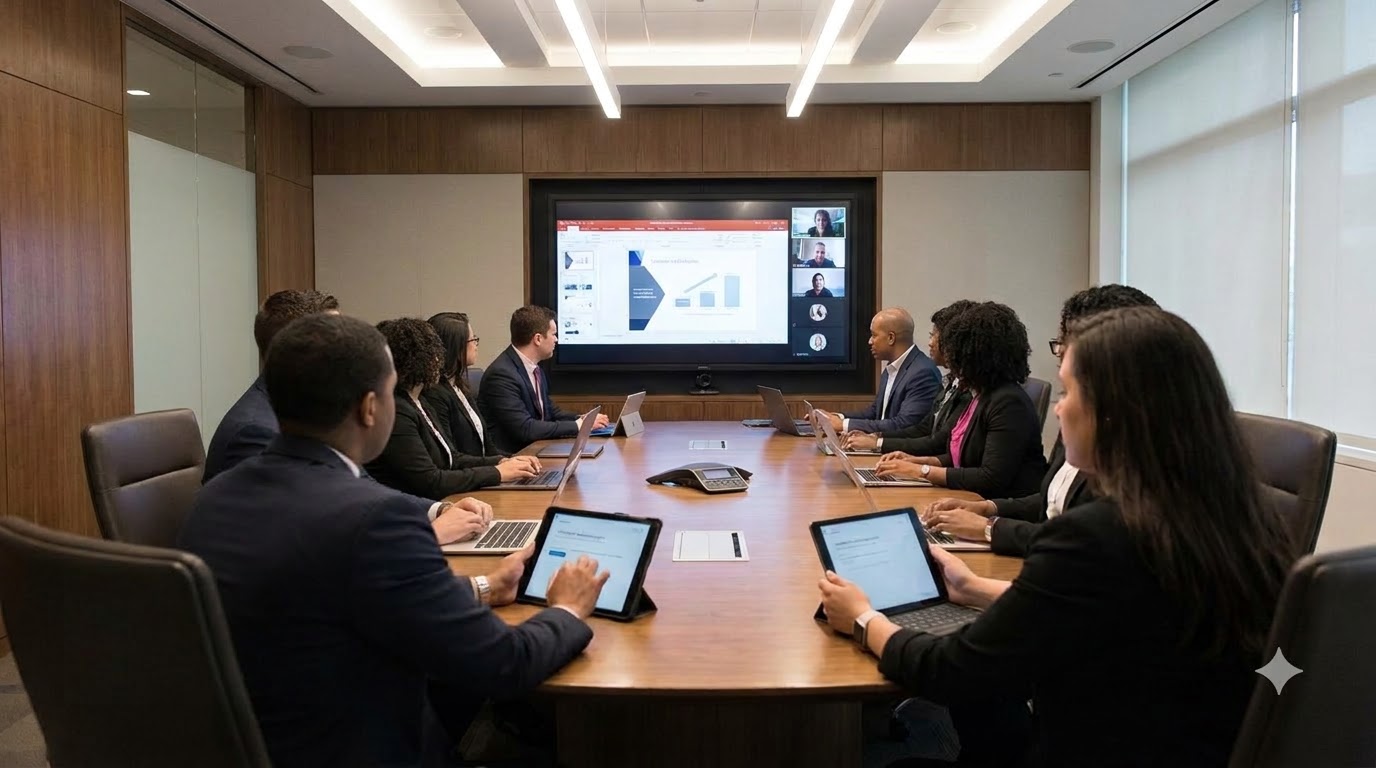

Integrating AV (audio visual) technology into a boardroom helps teams make decisions faster. It supports participation for remote workers. It also makes communication clearer and more effective. Over time it saves money.
Modern boardroom AV systems consist of a video conferencing hardware, wireless presentation tools, digital whiteboards and room-scheduling software. All these tools work together in one setup.
Below are the 10 important benefits companies notice after upgrading. Also included are things to think about before making the investment.
Why Boardroom Audio Visual Technology Matters
Hybrid work has made the boardroom one of the important and most tested areas in any office. A space that only worked for people in the room now has to help executives, traveling clients and teams spread out across different locations just as well.
This change is why audio visual solutions setup has gone from being something to have to being a basic part of workplace equipment along with internet and security.
- Enables Fast Decision Making
When everyone is in the room or remote, they can see the same data, dashboards and documents at the same time through boardroom av solutions. Integrated audio‑visual technology removes the hassle of saying “can you share your screen again?”. We can’t hear you,” which would otherwise stop conversations and force new explanations. Clear sound means less time clarifying and more time deciding.
- Remote Participation (Meeting Equity)
A well‑integrated boardroom provides all participants the same visibility, audio quality and ability to contribute as people sitting at the table.
Features such as auto‑framing cameras, ceiling microphone arrays and split‑screen displays for gallery view stop attendees from becoming passive observers. This idea is often called meeting equity. Is increasingly an expectation, not a differentiator.
- Improves Communication Clarity
Poor audio is one of the common reasons meetings run long or create disturbances. Boardroom‑grade microphones, noise cancellation and acoustic treatment ensure every voice is heard clearly to everyone.
- Reduces Travel Costs and Carbon Footprint
A boardroom can reliably host high‑quality meetings. So, stakeholders don’t need to fly in for a single meeting. Over a year, this can reduce travel budgets and time lost to travel. It reasonably reduces the amount of carbon footprint. An increasingly important metric for ESG reporting.
- Better Data Visualization
Boardrooms often host valuable conversations in a company like budget approvals, M&A discussions, and strategic pivots. Large‑format displays, dual or triple screens and digital whiteboards let teams present models, market data and scenario comparisons side by side. It is something that a single laptop screen or basic projector cannot support well.
- Increased Meeting Productivity
The Wireless presentation systems, one-touch conferencing and pre-configured room automation facilities of av integrated boardrooms remove the hassle at the start of every meeting. It avoids the wastage of time by connecting cables searching for the right input or dealing with audio issues teams can begin right away. When AV systems are fully integrated everything works with one tap. Over time this small improvement adds up to a lot of saved time across the organization each year.
- Enhanced Security for Sensitive Discussions
Boardrooms are where important and private conversations happen. Things like results, legal matters or decisions about staff. Using AV systems that support encrypted video conferencing, controlled access to room devices and secure network segmentation helps protect these discussions. Compared to consumer tools these systems reduce the risk of someone listening in recording the meeting without permission or leaking data.
- Scalability Across Multiple Offices and Regions
When every office uses the AV setup the experience stays consistent no matter where the meeting takes place. This standardization makes it easier for IT teams to support the systems, train staff and work with vendors. It also means that a leadership team in one region has the meeting environment as a team in another. That uniformity helps keep communication strong and operations smooth.
- Stronger Impressions for Clients, Investors and Stakeholders
A boardroom is often the place a client, investor or board member steps into. The way the room looks and works matters. A clean professional AV setup. With no cables, sharp displays and reliable connections. Shows that the company pays attention to detail. It reflects well on the organization’s overall facilities. Boardrooms can make a big difference during high-pressure meetings or presentations.
- Measurable ROI Through Space Utilization Data
Modern boardroom AV systems often connect with room-booking tools and occupancy sensors. This allows employees to know about the real-time data on how boardrooms are used. How often they are booked, how long meetings last and how many people attend. This information helps make decisions on meetings. It can support tech investments, guide real estate planning and reveal which rooms are underused or overbooked.
Traditional vs. Integrated AV Boardroom
| Factor | Traditional Setup | Integrated AV Boardroom |
| Meeting start time | 5–10 min setup/troubleshooting | Near-instant, one-touch join |
| Remote participant experience | Often secondary, hard to hear/see | Equal visibility and audio quality |
| Screen sharing | Cable-dependent, manual | Wireless, multi-device |
| Security | Ad hoc, consumer tools | Encrypted, access-controlled |
| Scalability | Inconsistent across offices | Standardized, replicable |
| Usage insights | None | Occupancy and utilization data |
| Impression on visitors | Dated, inconsistent | Professional, polished |
Frequently Asked Questions
What AV equipment does a modern boardroom need?
Modern boardrooms need high-definition display or dual-display setup. And they also need a conferencing camera with auto-framing. Modern boardrooms must have ceiling or table microphones with noise cancellation and a wireless presentation system. Modern boardrooms usually benefit from a room-scheduling panel, outside the door. Boardrooms that are larger often add whiteboards and multi-camera switching.
How much does boardroom AV integration cost?
Costs change a lot depending on the size of the room and features you need. A small room where people gather to talk can have a simple set of tools for video calls while a big room for important meetings with many screens, better sound and things that work automatically can be much more expensive. Asking a certified expert for prices based on your exact room and how you plan to use it is the best way to plan your money.
What’s the ROI of boardroom AV technology?
Return on Investment usually comes from three areas: time saved during each meeting because there’s less setup and fewer technical problems, lower travel costs because more people can join from remote locations and better use of office space which helps companies spend less on real estate. Companies that keep records of how hours they spend in meetings and how much they spend on travel before and after setting up the system can measure this return most clearly.
Is boardroom AV technology worth it for small companies?
Yes. A single well‑equipped boardroom can truly improve client meetings, collaboration and decision‑making speed for a small or mid‑sized company. A scaled‑down set‑up, with one display, one conferencing camera and one soundbar‑style mic/speaker gives most of the benefits while costing only a fraction of an enterprise system.
Do I need a professional AV integrator, or can I DIY it?
I find that simple huddle rooms with off-the-shelf conferencing kits can often be self-installed. Boardrooms that have displays, complex acoustics, strict security rules or need a uniform setup across many rooms usually benefit from a professional integrator. A professional integrator can avoid compatibility issues. It reduces the need for rework.