Trusted partner in LED and AV Solutions



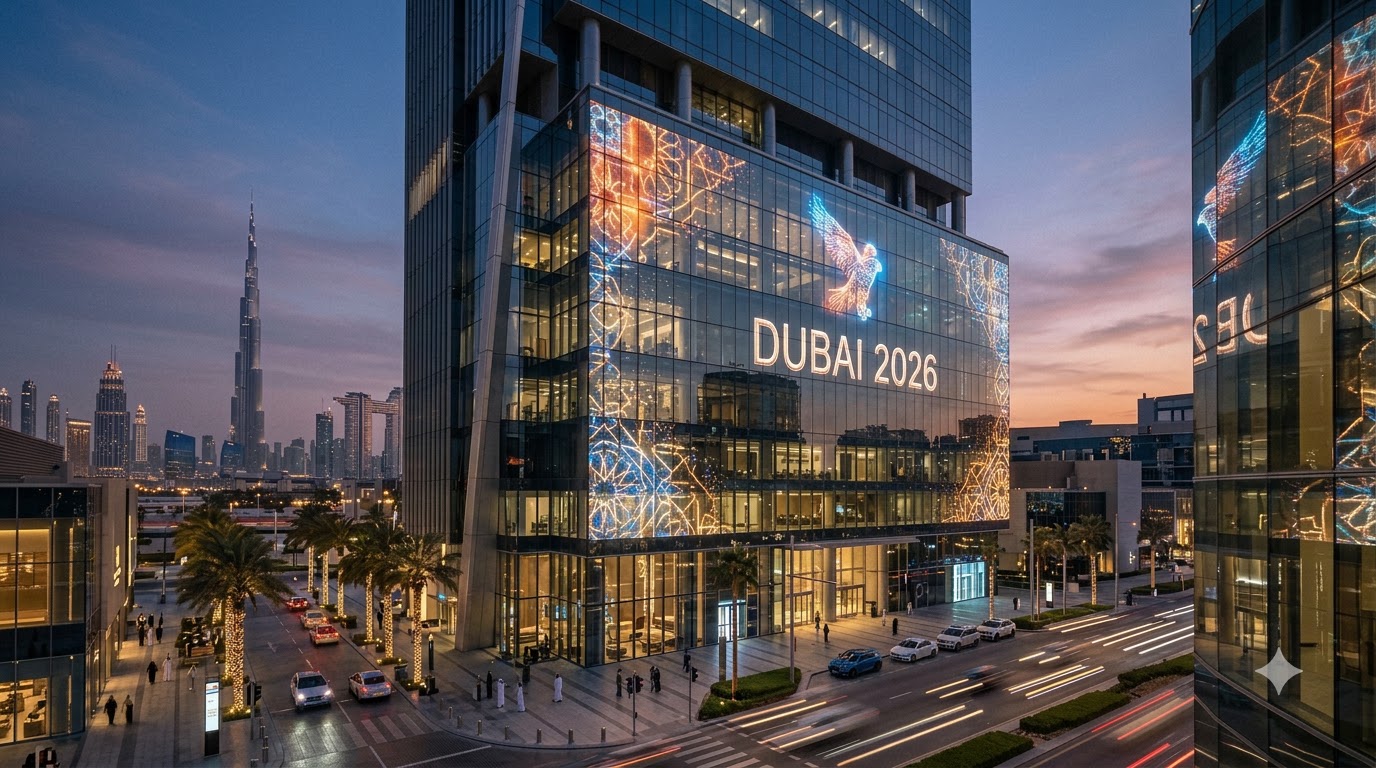

A glass LED screen is a transparent digital display in which tiny LED pixels are laminated inside safety glass or bonded directly onto a glass surface so the pane stays see-through while it plays video. Commercial models typically let 60% to 95% of light pass through, which means a shopfront, atrium balustrade, or facade can carry moving content without blocking daylight or views.
This guide is written for retail fit-out managers, architects, AV consultants, and procurement teams in the UAE and Saudi Arabia who are deciding whether a glass LED screen suits their project. The blog covers the ten points our engineers check before specifying one: the build types, transparency, pixel pitch, brightness, weight, glass safety, use cases, Gulf climate, cost, and maintenance.
If you are still comparing transparent display formats in general, start with our overview of the transparent glass LED screen, then come back here for the buying detail.
10 things to know before you specify a glass LED screen
1. “Glass LED screen” covers three different builds.
Suppliers use the term for three products, and they behave very differently on site. Confirm which one is in the quote before comparing prices.
- Laminated LED glass (LED-in-glass). In laminated glass LED screens, the LEDs are placed inside the interlayer between two glass panes and draw power through an invisible conductive coating on the glass. It replaces a glazing unit, so it is part of the building envelope.
- LED film on glass. A thin, self-adhesive LED film is bonded to existing glass. LG’s colour film is 2.0 mm thick with its protective layers and needs no structural frame (LG LAT240 spec sheet).
- Strip-type transparent LED behind glass. Rows of LED bars in a slim aluminum cabinet stand just inside the window. Typical panels are 1,000 × 500 mm with 4,000 to 6,000 nits (ProDisplay datasheet).
On our own product pages, the transparent glass LED screen covers glass-integrated builds and the transparent film LED screen covers retrofit film.
2. Transparency is a percentage of light, not a promise of a clear view
Transparency (or transmittance) is the share of light that passes through the screen. Laminated LED glass is offered at 50% to 90% depending on pixel pitch, and Bebright’s glass-integrated range reaches up to 90%.
For scale, LG rates its LED film at 73% and compares that to a car’s tinted windscreen (LG LAT240). Strip-type screens sit lower, around 68% and if daylight inside the shop matters, ask for the transmittance at the exact pitch you are buying.
3. Pixel pitch sets resolution, transparency, and viewing distance together.
Pixel pitch is the gap in millimetres between pixel centres. A smaller pitch looks sharper up close but packs in more LEDs and wiring, which lowers transparency. Laminated LED glass is sold from 5 mm to 50 mm pitch (Pentact); LG’s colour film uses 24 mm.
A working rule from our LED vs LCD video wall guide: the minimum comfortable viewing distance in feet is roughly three times the pitch in millimetres. A 10 mm glass screen therefore suits viewers about 9 m away, such as shoppers across a mall concourse.
4. Brightness has to beat Gulf daylight.
Brightness is measured in nits (cd/m²). A film rated above 1,000 nits suits shaded interiors and atriums (LG LAT240). Strip screens at 4,000 to 6,000 nits are built to be read in direct sunlight behind a window (ProDisplay).
Dubai averages more than 10 hours of sunshine a day from April to September (Climate of Dubai). For sun-facing glass, specify high brightness plus an ambient light sensor, so the screen dims at night instead of glaring.
5. Check the operating temperature, not just the spec sheet headline.
Dubai’s mean daily temperature maximum reaches 41.9°C in August, and the city recorded 50.1°C in July 2023 (Climate of Dubai, NOAA 1991–2020 normals). Glass in direct sun runs hotter than the air around it.
Compare that with the rating: LG’s film is approved for 0°C to 45°C, indoor glass installation only (LG LAT240). Ask every supplier for the rated glass-surface temperature and an IP rating. Laminated units are offered up to IP67 (Pentact). UV matters too; the UV index stays at 11 or higher from April to September, and the PVB interlayer in laminated LED glass absorbs more than 99% of UV light.
6. Weight decides whether you need a structural engineer
LED film adds very little load. LG’s film panel weighs 0.73 kg for 668 × 480 mm, about 2.3 kg/m² (LG LAT240). That is why transparent film LED screens suit retrofits on existing shopfronts and partitions.
Laminated LED glass is a different category at about 35 kg/m² (Pentact), because it is the glass itself. Treat it as a façade or glazing package, with the glazing contractor and structural engineer involved from the concept stage.
7. Laminated LED glass is safety glass, so ask for the test reports.
In laminated LED glass, two panes are bonded to a clear PVB interlayer under heat and pressure. If the pane breaks, fragments stay stuck to the interlayer rather than falling (Shenzhen Dragon Glass). That makes it suitable for balustrades, lift shafts, and overhead glazing where standard screens are not allowed.
Do not accept “safety glass” as a label alone. Ask for impact-test reports against a recognized safety-glazing standard (for example, EN 12600 or ANSI Z97.1), the interlayer type (PVB or SGP), and the glass build-up, such as 6 mm + 6 mm.
8. In Dubai, street-facing video needs a permit check first.
Dubai’s Outdoor Advertising Manual, issued in 2024 by the RTA and Dubai Municipality, says trade-name signage on shopfronts must stay static, with no video or moving images. The Department of Economy and Tourism issues and inspects these permits (Government of Dubai Media Office, May 2026).
In October 2026, Dubai Municipality also issued Advertising Content Regulation Guidelines that cover digital displays, animations, and interactive advertising (Gulf News). Before you run video on any glass visible from the street, confirm with the mall operator and the relevant authority which content and brightness rules apply.
Get more information from the outdoor LED permit guide.
9. Optimal applications for maintaining glass in its original form
A glass LED screen is a good choice when you want to hide a solid screen so it does not block the view or the architecture. The most successful use cases we have observed in the UAE & Saudi Arabia:
- Retail show windows: product stays visible behind the content, so the window still sells when the screen is dark.
- Mall atriums and balustrades: laminated LED glass doubles as the safety barrier.
- Panoramic lifts and curtain walls: content on glazing that cannot carry a cabinet (Pentact).
- Corporate lobbies and glass meeting rooms: branding on partitions without losing openness.
- Airports, hotels, and showrooms: wayfinding and campaigns on existing glazing.
For large building façades viewed from the road, an outdoor LED mesh screen is often the better fit than glass.
10. Price the whole life, not the square meter.
The per-square-meter price is driven by pixel pitch, transparency, glass build-up, custom shapes, and the control system. Laminated LED glass costs more per square meter than film, but it also replaces a glazing unit you would otherwise buy.
Then add lifespan and upkeep. LG rates its film at 50,000 hours to half brightness, with adhesion rated for the same 50,000 hours (LG LAT240). At 18 hours a day, that is about 7.6 years. Ask each supplier three questions:
- How is a failed pixel or strip replaced, and can it be done without removing the glass?
- Are spare panes or film modules from the same production batch held in the UAE?
- What response time does the service agreement guarantee?
Bebright, being the best LED screen company in Dubai, handles site assessment, supply, installation, calibration, content management setup, and after-sales support as one team.
Glass LED screen vs. other transparent LED formats
Choose laminated LED glass when the screen must also be the glazing. Choose film-led screen when you are retrofitting an existing glass-led screen, and choose strip-type when brightness behind a sunny window matters most.
| Format | How it mounts | Transparency | Brightness | Weight | Best fit |
| Laminated LED glass | Replaces the glass pane | 50%–90% | Varies by model | ~35 kg/m² | New façades, balustrades, lifts |
| LED film on glass | Self-adhesive on existing glass | 73% (LG LAT240) | >1,000 nits | ~2.3 kg/m² | Retrofit windows, partitions |
| Strip-type transparent LED | Cabinet behind the glass | ~68% | 4,000–6,000 nits | Cabinet-mounted | Sun-facing shop windows |
| Outdoor LED mesh | External frame on the building | Semi-transparent | Outdoor-rated | Light for its size | Large façades seen from roads |
Glass LED screen specification checklist for UAE projects
Send these eight items with every request for quotation so suppliers price the same thing.
- Build type: laminated LED glass, LED film, or strip-type behind glass.
- Glass details: existing or new, thickness, build-up, and whether it is tempered or laminated.
- Pixel pitch and viewing distance: nearest regular viewer in metres.
- Transparency target: minimum percentage at the quoted pitch.
- Brightness: nits, and whether an ambient light sensor and auto-dimming are included.
- Environment: sun orientation, rated glass-surface temperature, IP rating, indoor or outdoor face.
- Approvals: safety-glazing test reports, mall or landlord approval, and any DET or Dubai Municipality content permit.
- Service: lifespan rating, spare stock held locally, repair method, and guaranteed response time.
Need help filling it in? Our engineers offer a free site assessment across the UAE and Saudi Arabia.
Frequently asked questions about glass LED screens
What is a glass LED screen?
A glass LED screen is a transparent display where LED pixels are laminated inside safety glass or bonded onto it as a film. Content plays on the glass while people can still see through it, typically with 50% to 90% light transmission.
Is a glass LED screen the same as a transparent LED screen?
It is one type of transparent LED screen. “Transparent LED” also includes strip-type cabinets that stand behind glass and LED film applied to glass. A glass LED screen specifically means the LEDs are inside or on the glass itself.
How transparent is a glass LED screen?
Most commercial products let 50% to 90% of light through, and higher transparency usually means a larger pixel pitch. LG’s LED film is rated at 73%, which LG compares to a tinted car windscreen.
Can a glass LED screen be fitted to existing glass?
Yes, if you use LED film, which bonds to existing windows or partitions with a self-adhesive layer. Laminated LED glass cannot be retrofitted, because it replaces the glass pane.
Can a glass LED screen be used in direct sunlight in Dubai?
Only if it is bright enough and rated for the heat. Look for 4,000 nits or more for sun-facing windows, and check the rated glass-surface temperature, since some films are rated only up to 45 °C.
How long does a glass LED screen last?
Leading LED film is rated for 50,000 hours to half brightness. That is about 7.6 years at 18 hours a day; laminated products vary, so ask for the rated lifespan in writing.
Do I need a permit for a glass LED screen in Dubai?
Possibly. Dubai’s shopfront rules require trade-name signage to stay static, and Dubai Municipality’s 2026 content guidelines cover digital displays. Check with your landlord and the relevant authority before running video that faces the street.
Plan your glass LED screen with Bebright Global
Bebright Global supplies and installs transparent glass LED screens and transparent film LED screens across Dubai, Abu Dhabi, Riyadh and the wider GCC. We work alongside architects, façade contractors and AV consultants from design stage to handover. Request a free site assessment or call +971 50 403 7863.